
Walk your retail floor at three o'clock on a Tuesday, and you will likely see a distinct pattern in how customers move through your shop. Shoppers naturally gravitate toward bright windows and wide, open center aisles, leaving back corners and architectural recesses completely ignored. When testing new boutique display ideas, independent retailers often discover that these cold zones represent expensive, unused square footage that actively drags down average sales per square foot.
Why Traditional Shelving Fails in Slow Retail Zones
Many shop owners try to solve the problem of quiet corners by packing them with high-density shelving or clearance items. The logic seems sound, hoping that sheer volume or deep discounts will force shoppers to walk to the back. In practice, this approach usually backfires, creating visual clutter that signals to customers that the area is merely a storage spot or a clearance closet.
To break this cycle, you must think beyond standard shelving. Successful retail merchandising relies on creating destination points that pull people through the entire space. When implementing new boutique display ideas, the goal is to design a visual pause, a curated scene that invites exploration and makes the customer slow down.
By treating these slow retail zones as distinct design opportunities, you can shift how foot traffic flows. Instead of trying to force customers into a dark corner with raw inventory, you can draw them in by creating a warm, atmospheric destination that feels entirely different from the rest of the store.
Visual Merchandising Techniques for Low-Light Contrast
Human eyes are naturally drawn to the warmest, brightest point in a room. In a brightly lit store, a dark corner looks uninviting, but a completely flooded, fluorescent corner looks clinical. The secret to capturing attention lies in low-contrast, warm illumination that mimics the transition from day to night.
Using illuminated branches and Starlit Forest Trees creates an organic, soft glow that feels residential and intimate. This warmth stands out beautifully against deep-toned backgrounds. By painting a slow corner a dark accent color like deep charcoal, navy, or rich plum, you make the warm LED light pop, turning a forgotten wall into a glowing focal point.
When sourcing these visual anchors, product quality is critical. Opting for cheap imports can ruin the entire effect, as unnatural, cool-toned blue lights repel customers rather than drawing them in. Investing in realistic, warm-toned lighting ensures your display looks expensive and inviting. For a deeper look at this, read about why cheap imports cost retailers more than realistic flickering LED candles.
Step-by-Step: Building a High-Margin Corner Vignette
Transforming a dead zone does not require a complete store remodel. You can build a highly effective, margin-protecting display using a few deliberate design choices and the right lighting elements.
1. Establish the Moody Backdrop
Paint the back corner or the recessed alcove in a deep, matte tone. A rich charcoal or a deep plum-grey absorbs harsh overhead fluorescent light and provides the perfect high-contrast canvas. This simple change instantly separates the vignette from the rest of the sales floor, creating a sense of drama and intimacy.
2. Layer the Lighting Displays
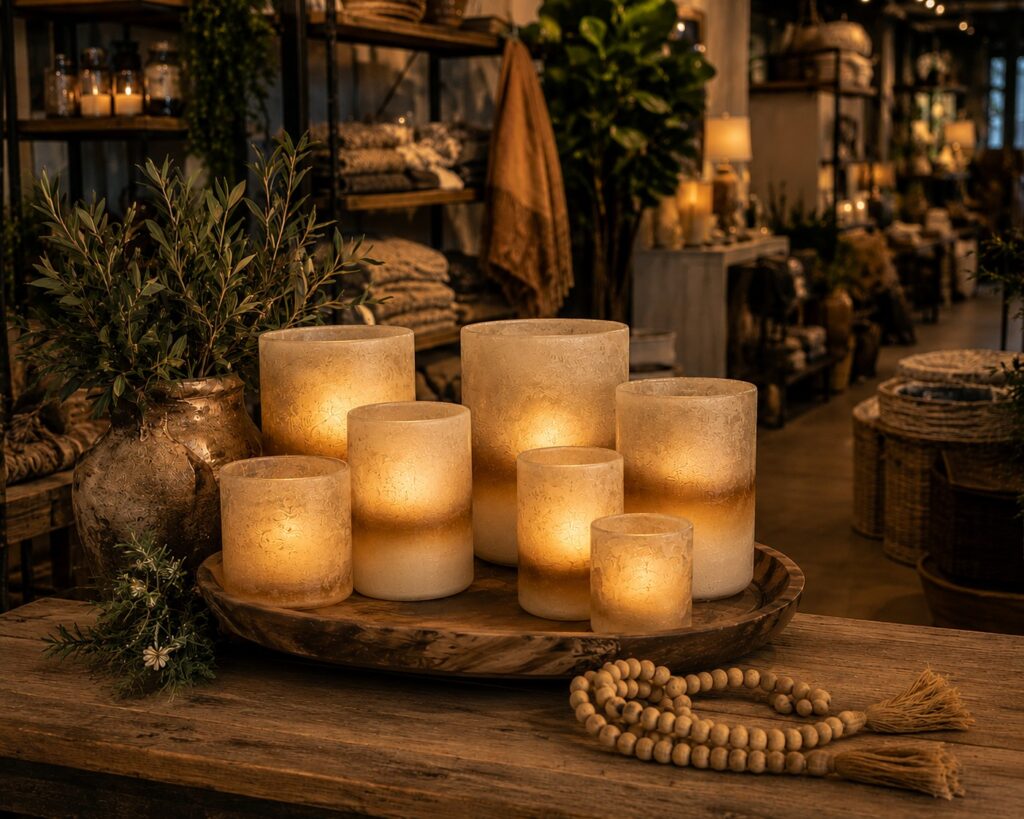
Place a Starlit Forest Tree or illuminated branches in the rear of the space to establish height and draw the eye upward. Next, add mid-level warmth using realistic LED candles on tables or shelves. By choosing commercial-grade flameless candles, you protect your inventory from soot and eliminate open-flame hazards on the sales floor. Many boutique owners find that sourcing realistic LED candles wholesale protects boutique margins because customers love the look and buy them directly off the display.
3. Anchor with High-Margin Products
Do not fill the space with cheap impulse items. Instead, use the warm, elevated atmosphere to showcase your highest-margin home decor, luxury gift items, or seasonal statement pieces. The atmospheric lighting makes the surrounding products look more premium, justifying higher retail price points and encouraging larger basket sizes.
Merchandising for Impulse Buys in Restored Spaces
Once shoppers are drawn into the former dead zone, give them a reason to linger. Style the vignette like a curated home interior, using natural textures like Belgian linen, weathered white oak, and warm terracotta. This helps customers visualize how the products will look in their own living rooms, increasing their emotional connection to the items.
You can also use this space to introduce seasonal collections ahead of schedule. During late summer, setting up a cozy autumn vignette with illuminated birch trees and warm amber lighting prepares buyers for the upcoming holidays. Planning these seasonal transitions early is a smart business move, especially when you consider how securing wholesale holiday decorative lighting early prevents fourth-quarter stockouts.
Keep the display dynamic by rotating the supporting products every two to three weeks. While the glowing LED trees can remain as permanent architectural anchors, changing the styled accessories keeps the corner feeling fresh for your regular local shoppers. Over time, your customers will learn to visit this corner first to see what is new.